

Godot 4 for Beginners: Why It's the Best First Game Engine in 2026 (And How to Get Started)

Game Gen • June 23, 2026

Share this article

Picking your first game engine is one of the most consequential decisions you'll make as a beginner — and in 2026, the same engine keeps rising to the top of every credible recommendation list: Godot 4 . Free to download, free to use forever, and built by a community of developers who actually use it, Godot 4 has grown from a scrappy open-source project into what many industry observers now consider the ideal starting point for aspiring game developers.

The data backs this up. According to a March 2026 analysis by Ziva (drawing on SteamDB data), games shipped on Steam using Godot have roughly doubled each year: 618 titles in 2023–24, 1,500 in 2024–25, and 2,864 in 2025–26. Google search interest in Godot has grown at a 45% compound annual rate over four years — nearly five times its 2022 level — while Unity's search interest has stayed flat. This is not a niche engine. It is a movement.

At Game Gen , Godot is one of the three core engines our instructors use to take California students from zero coding experience to building original, complete games. Our mentors have shipped titles at Sony Computer Entertainment America, Brass Lion Entertainment, Midnight Hour Games, and Game Mechanic Studios. Here is what we know about why Godot 4 is the right starting point — and what the first steps actually look like.

Why Godot 4 Is the Game Engine Everyone Is Talking About

Godot has been free and open-source since 2014, but Godot 4 — launched in March 2023 and now on version 4.6 — represented a generational leap. The 4.x series brought Vulkan-based rendering, rebuilt physics systems, dramatically improved 3D support, and a cleaner scripting architecture that makes large projects far more manageable. Godot 4.6, released in January 2026, added workflow improvements that make the editor noticeably more intuitive for beginners, according to Game Developer's coverage of the release.

The growth numbers are striking. Godot's GitHub repository now holds over 107,000 stars — a 21-fold increase since 2016, per Ziva's March 2026 analysis citing GitHub data. The r/godot subreddit grew from 30,000 subscribers in 2020 to 296,000 in 2026. Godot's Discord community has surpassed 80,000 active members. A 2025 Sensor Tower market analysis found that Godot (combined with GameMaker) had grown its Steam game market share from roughly 4% in 2021 to 9% by 2024, and that trajectory has continued upward through 2026.

For beginners, the most relevant number is zero: Godot costs nothing. No subscription. No per-seat license. No royalty on commercial releases. If you want to build games without spending money on tools before you've shipped anything, Godot removes that barrier entirely.

Godot 4 vs. Unity vs. Unreal Engine: What Beginners Actually Need to Know

Three engines define serious game development in 2026: Unity, Unreal Engine, and Godot. For teams building AAA titles or targeting specific console platforms, each has specific strengths. For beginners, the comparison looks different.

Unity is the most widely used engine on Steam by number of titles. It has the largest asset store (80,000+ assets), excellent documentation, and a community built over more than a decade. However, Unity's 2023 Runtime Fee controversy — in which the company proposed retroactive per-install charges that blindsided developers worldwide — damaged trust across the indie community and accelerated Godot adoption, according to Ziva's 2026 data analysis showing Reddit r/godot growth "accelerated sharply in 2023–2024, coinciding with the Unity pricing controversy." Unity canceled the fee in 2024, but the episode illustrated a structural risk of depending on a venture-backed commercial engine. Unity also carries a steeper initial learning curve than Godot, particularly for developers with no prior coding background.

Unreal Engine 5 powers many of the most visually impressive AAA productions. But its C++ pipeline, complex Blueprint visual scripting system, and team-oriented architecture make it the hardest of the three for solo beginners. It is genuinely excellent software — and not the right first engine.

Godot 4 is the beginner-aligned engine. Not because it is simple — it is fully capable of professional-quality work — but because its architecture was designed with clarity in mind. Community consensus in 2025–2026 has crystallized around this. A GameDev.net breakdown called Godot "the most fun engine to work with" for beginners, noting that "when Unity's monetization misstep sent shockwaves through the industry, a lot of people landed here. And stayed." Reddit's r/GameDevelopment consistently points beginners to Godot, with users specifically citing GDScript and the quality of the official documentation.

What Makes Godot 4 Ideal for People With No Coding Experience

One of the most persistent myths about game development is that you need years of programming experience before building anything worth playing. Game Gen students — including adults with no prior coding background and students enrolled through California Regional Centers — consistently disprove this. But the engine you start with matters.

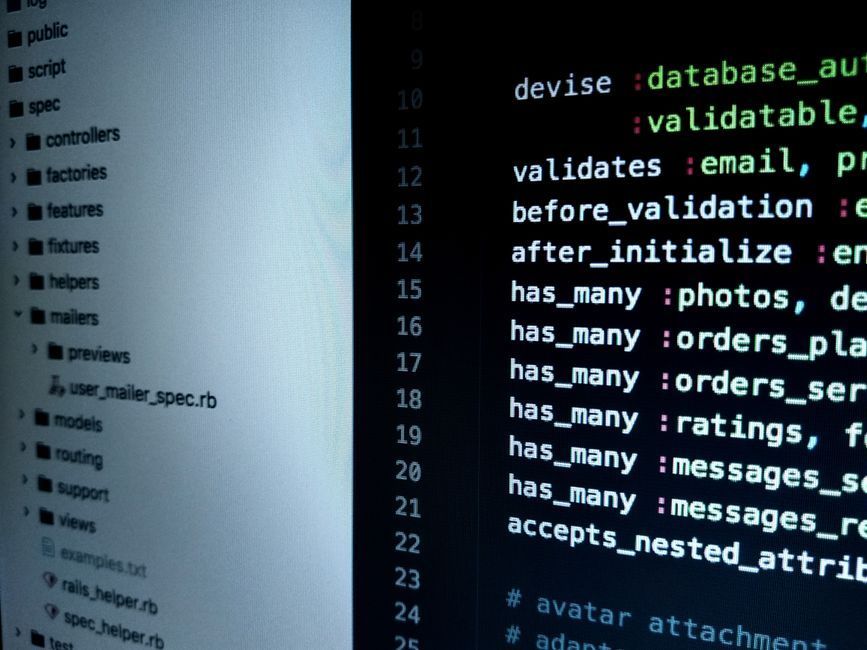
Godot 4's GDScript scripting language is the key advantage. It is a dynamically typed, Python-inspired language built specifically for game development. Compared to C# (Unity) or C++ (Unreal), GDScript's syntax is significantly more readable. Variables are declared clearly. Logic reads like plain English. The relationship between a character, its movement, and its collision response is expressed in ways that map directly to how you'd describe a game in conversation. Multiple community sources in 2025–2026, including GameDev.net and Reddit, specifically describe GDScript as "like Python for games" — a comparison that accurately captures both its accessibility and its effectiveness.

Godot's scene-and-node system is the second major advantage for beginners. Every element in a Godot game — a player character, a camera, a sound effect, a UI button — is a "node." Nodes are organized into "scenes," which can be combined, reused, and swapped out. This gives beginners a visual, modular mental model for building games rather than writing abstract systems from scratch. Fireship (Jeff Delaney), whose "Godot in 100 Seconds" video crossed two million views, described this as "the cleanest abstraction in game development," according to tech-insider.org's 2026 Godot vs. Unity comparison. The entire Godot editor fits in a 30 MB download — compared to Unity's multi-gigabyte installer — so getting started requires neither a high-end machine nor significant bandwidth.

For neurodiverse learners — students with ADHD, autism, or other learning differences who think visually and thrive with structured, modular systems — Godot's architecture is particularly compatible. It is not a coincidence that Game Gen, which operates a dedicated neuroinclusive learning environment and serves students through California Regional Center partnerships, has found Godot among its most effective teaching tools. The engine's design philosophy aligns with how many neurodiverse learners approach problem-solving.

What You Can Actually Build Once You Learn Godot 4

The games Game Gen students build in Godot are not "practice projects." They are original, playable games — quest-driven adventures, platformers, top-down shooters, and narrative experiences with real character design and lore. Student work is showcased on the Game Gen games page.

Godot 4 is capable across genres. Notable commercial games built with Godot include Brotato (a top-down roguelike), Halls of Torment (a Diablo-style survivor game), and Dome Keeper (a mining/defense hybrid), according to tech-insider.org's 2026 engine comparison. These are commercially released titles with real player bases — all built with a free engine. The 2,864 Godot games shipped on Steam in 2025–26 span every major genre.

Game development skills also extend well beyond games. The 3D modeling, animation, and real-time simulation techniques you learn in Godot 4 transfer directly to careers in healthcare visualization, architectural rendering, and film VFX — as covered in our earlier post on 3D modeling skills beyond gaming. Godot 4's Vulkan renderer and rebuilt physics systems mean that what you learn here is modern, transferable, and valued across industries.

For California developers specifically, Godot fluency opens doors at indie studios, educational technology companies, simulation and training providers, and the growing cohort of California game studios that have adopted the engine since 2023. Our full guide to becoming a game developer in California covers the career pathways in detail.

How Mentorship Accelerates Godot 4 Learning: The Game Gen Difference

YouTube tutorials can get you started. The official Godot documentation is genuinely among the best in any game engine ecosystem. But the fastest path from "complete beginner" to "I built a game I'm proud of" runs through mentorship — structured, personalized guidance from someone who has shipped real games and understands where beginners get stuck.

Game Gen's instructors are not hobbyists. They are working professionals from Sony Computer Entertainment America, Brass Lion Entertainment, Midnight Hour Games, Worlds Untold, RedZone Interactive, Game Mechanic Studios, Kung Fu Factory, Pixel Craft Studios, and Gladius Studios. When a Game Gen student is debugging a Godot physics issue or restructuring a scene hierarchy that has grown unwieldy, their mentor is someone who has solved that exact class of problem in a shipped commercial title.

This matters in ways that are difficult to describe until you experience them. A tutorial can show you how a mechanic works in a generic context. A mentor who knows your specific project — its scope, its genre, your learning style — can tell you exactly why your character controller is behaving incorrectly, how to restructure your approach, and what the professional pattern looks like. That compression of learning time is significant.

Game Gen's adult video game design classes run online, with flexible scheduling designed for people balancing work, family, or other commitments. The adult studios online program places students in a collaborative studio environment. Students connect with mentors and peers via video, voice, and text — the same communication modes used by distributed professional development teams. Students describe the experience consistently: going from "not knowing how to do any programming" to "creating their own games and updating their blogs with new work consistently." That trajectory requires more than a playlist. It requires people.

Getting Started With Godot 4: Your First Week

If you want to begin independently before speaking with a Game Gen mentor, here is what a productive first week looks like:

Day 1 — Download and orient. Go to godotengine.org and download the current stable version (4.6.3 as of May 2026). The download is approximately 30 MB. Open the editor and spend 30 minutes exploring: the scene tree on the left, the inspector on the right, the viewport in the center. Do not start a project yet. Just look.

Days 2–3 — Complete the official "Your First 2D Game" tutorial. This tutorial is free in Godot's documentation and walks you through creating a complete, playable game from scratch using GDScript. Type the code rather than copy-pasting it. Muscle memory and comprehension build together when you type.

Days 4–5 — Break things intentionally. Change values, introduce bugs, then find them. Intentional experimentation is how beginners develop intuition about how the engine responds. A scene that does something unexpected when you change a physics value is teaching you physics.

Days 6–7 — Join the community. The r/godot subreddit (296,000+ members as of 2026) and the official Godot Discord are both unusually welcoming to beginners. Ask questions. Read other people's questions. The problem you're struggling with has almost certainly been asked and answered.

When you're ready to move from independent tinkering to building real games under professional guidance — with mentors who have worked at Sony and Brass Lion, in a community designed to support your specific learning style — explore Game Gen's adult game development programs or schedule a tour.

Frequently Asked Questions About Godot 4 for Beginners

Is Godot 4 good for absolute beginners with no coding experience?

Yes. Godot 4's GDScript language is designed for beginners — its syntax resembles Python, and the official documentation includes a step-by-step introductory game tutorial that requires no prior programming knowledge. The scene-and-node architecture gives newcomers a visual, modular way to understand how games are structured. The overwhelming community consensus in 2025–2026 recommends Godot as the starting engine for most beginners.

Is Godot 4 better than Unity for beginners in 2026?

For most beginners starting from scratch, yes. Godot is completely free with no licensing traps, its learning curve is gentler, GDScript is more accessible than C#, and the engine is significantly lighter to install. Unity's 2023 Runtime Fee controversy also accelerated developer migration to Godot. Unity remains a powerful and widely used engine — but for a beginner with no prior investment in either platform, Godot is the more straightforward starting point.

How long does it take to learn Godot 4 well enough to build real games?

You can build a simple playable game in a weekend using Godot's documentation tutorials. Building original, polished games — the kind you'd put in a portfolio or release commercially — typically takes 6 to 12 months of consistent learning, depending on weekly hours invested. Game Gen students who commit 20–40 hours per week under professional mentorship consistently reach that milestone significantly faster than self-taught developers working alone.

Can I get a job in the game industry if I learn Godot?

Yes — with context. Godot skills are most valued at indie studios, smaller development teams, educational technology companies, and organizations building simulation or interactive training products. For roles at large AAA studios, Unreal Engine (C++) and Unity (C#) experience is typically expected. Game Gen's kids and teens programs and adult programs teach multiple engines — including Unreal and Construct alongside Godot — so graduates develop the versatile, multi-engine fluency that professional environments expect.

Recent Posts

By Game Gen June 23, 2026
Game developer portfolio tips for California beginners: what projects to build, what studios look for, and how to present your work. From Game Gen mentors with experience at Sony and Brass Lion Entertainment. Start building yours.
By Game Gen June 23, 2026
California hosts 44% of all U.S. game industry jobs — over 36,000 positions. Here's how community college programs, coding bootcamps, and online mentorship programs like Game Gen actually compare on cost, flexibility, game-specific tools, and real outcomes. From 10 years of training California game developers.
By Game Gen June 19, 2026
The 3D modeling market is growing to $48.9B by 2030. Game Gen skills open doors in healthcare visualization, architecture, film VFX, and product design—not just games.
By Game Gen June 17, 2026
How to become a game developer in California: the skills you need, learning paths compared honestly, and why mentorship from Sony and Brass Lion veterans accelerates results. Game Gen has trained aspiring developers across California for over 10 years — start your roadmap here.